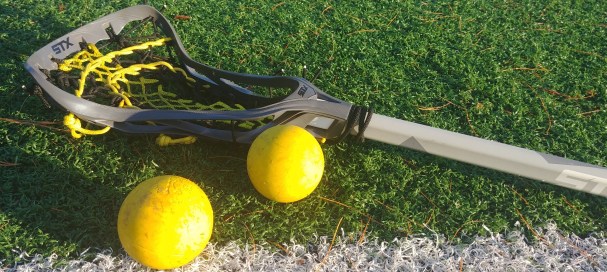

Your Stick is Your Tool for Your Success:
A good craftsman always keeps their tools in best condition. This is no different for lacrosse.
Shooting Strings: The reason for them is to have the ball roll off them and not hit the top plastic of the stick (when the ball hits the plastic, its angle is changed). The top shooting string is meant to be very tight across the top (tighter the better). The lower shooting string is less tight and needs to be just strong enough to allow the ball to roll off both strings. When you put your fingers in the sweet spot and draw them toward the top, you should feel an even amount of pressure on the strings.
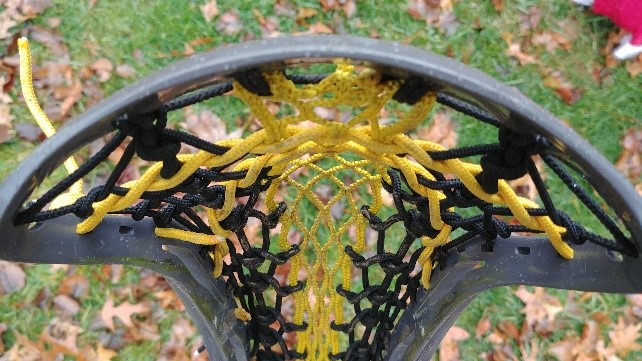
Leathers: Leathers act as the channel for the ball. They allow the ball to stay in a groove when cradling, passing and shooting. Leathers should be tied off at the bottom of the pocket and tight enough so that, when you push down on them about halfway down the head, the leathers drop just under the bottom of the sidewalls.
One thing to consider: if an official tells you to tighten your stick, check the leathers first. If you tighten these well enough, you will still keep your sweet spot and runner deep enough to keep control. If that does not do enough, then you will need to tighten the runner.

Runners: These are mostly manufactured pieces that work to rest the ball in the stick. As seen with newer sticks, manufacturers are making them wider at the top to seat the ball in the shooting/passing position. Still, runners are only part of what is needed. A runner is only as good as the pocket lacing between the runner and the leathers holding it. If the lacing gaps are the same from bottom to top, then the runner sweet spot will be around the center of the head. If the lacing tapers down from the shooting strings to the bottom of the pocket, then the sweet spot will ride higher on the stick. To manage this in the field, take your fingers and wiggle them into the gaps with your first finger closest to the lower shooting string. Do this for both sides of the lacing gaps. Your bigger fingers will create a larger gap and sweeter spot at the top of your stick. If you want more of a sweet spot below the shooting string, you can work the laces up from the bottom of the stick into the sweet spot (easier to do if you have needle nose pliers).
 Queen City Girls Lacrosse - from the coach's perspective