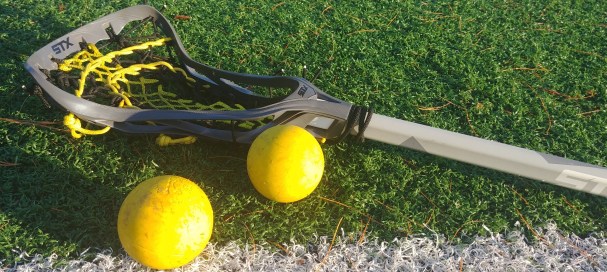
Please keep in mind that this is general information. There is no one coach who has the Golden Egg on these techniques.
Stance:
There is no one or two or even five stances that are best. Everything is how you plan, prepare and practice. It is always better to train hard on at least two different draws, probably three. Here are some pointers.
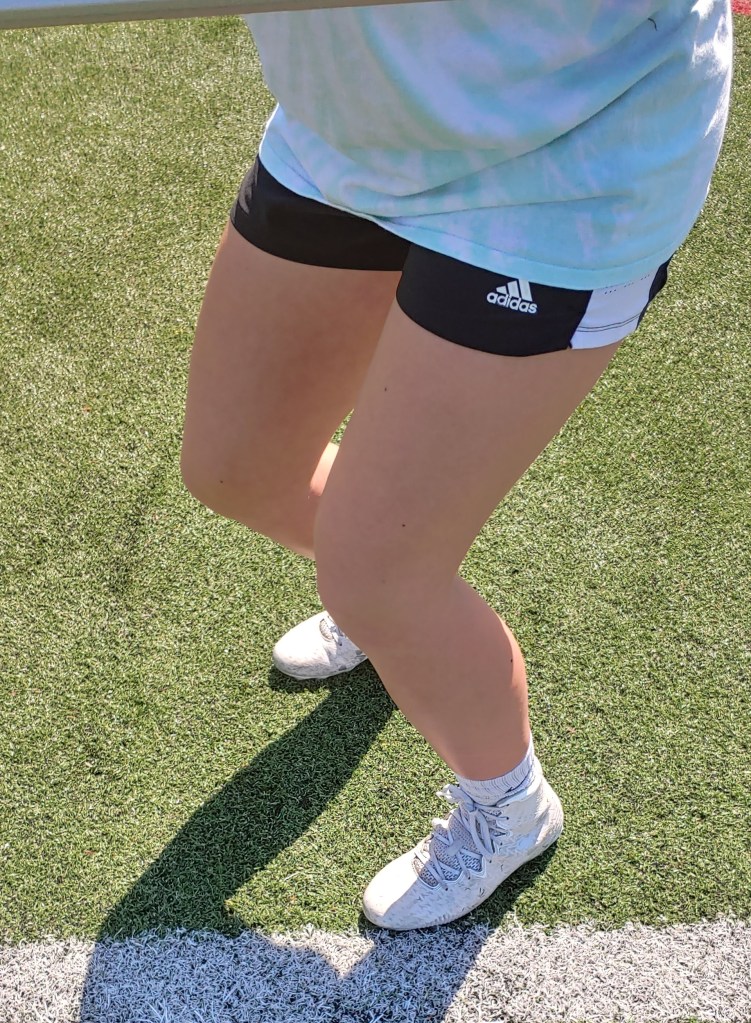
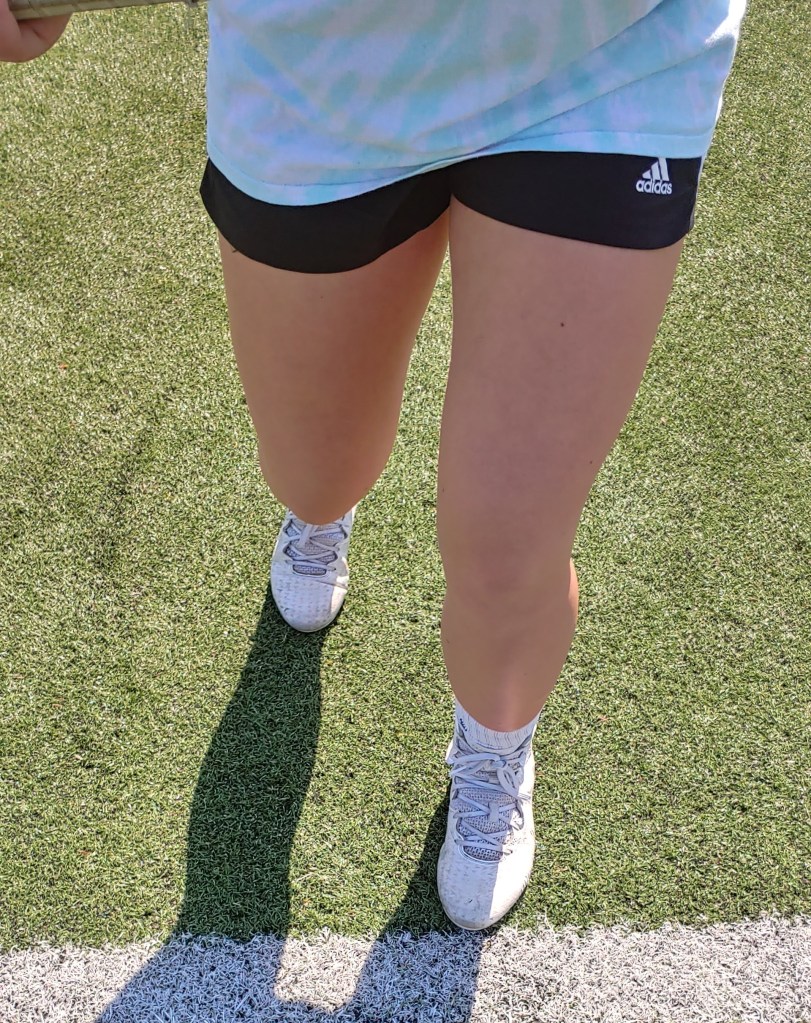
I have a player, a young player, who developed her draws like she was leaning against a wall. Left foot on the line and right foot behind with toes looking forward, in a crouch. It looked like she was going to push and, in fact, that was what she always did. As she was a young player with a lot of conviction, she was pretty successful. This stance gave her all the energy of her right leg to push off at the whistle and blow through the opponent’s stick. It works for most push draws. The difficulty was that it became predictable.
Our new training works on popping the ball into the air and controlling where it is going. So, we dug into how else we can set our feet, hips and hands.
Torque:
No matter where we place our feet, we want to, as much as possible, turn our hips so they are parallel with the midline. When our feet are pointing straight forward and we are planning to push through the draw, this is easy to do. If, though, we are lining up to direct the ball to other parts of the circle, this becomes more difficult.
We want to do this so we can use our hips and quads to push/pull our torso out of the draw when the whistle blows. This adds to our strength package in moving the ball. We will develop our way to snap out of the hip rotation depending on our goal, but we will always start from a practiced set stance.
One note on this: the feet should both be pointing in pretty much the same direction. They can be a bit duck footed (pointing apart), but not too far. If we think about it, we want to start into our stance by setting our feet and hips where we want when we have finished snapping the draw. Then we rotate our hips and shoulders to the midline and as we move our torso will go into a crouch. We will be tightening our quads to snap at the whistle.

Hand Placement:
The upper hand is always as close to the plastic of the head as can be done. The grip may change depending on the action you plan at the whistle.
The bottom hand is more variable. Depending on the result, the hand can be at the butt of the stick or anywhere up to about 1/3 of the way up toward the head.
More on this when we figure out where we want to send the ball.
Stick Head Placement:
The official will always work to make the heads of the sticks set so that the sidewalls are always rubbing against each other. They are trying to create a neutral pressure with equal opportunities.
What we seek is to get our bottom sidewall just above the lip of our opponent’s sidewall. If we can do this, then we are better prepared to scoop the ball out of our opponent’s head. This reality is reinforced by new sticks that are being designed exclusively for draws (Gait Draw, STX Axxis, Nike Lunar Fly). We want to dig the ball out and control where it will go.
To better understand, listen to Sammy Jo Tracy at the 2:45 mark.
So, where do we want to send the ball on the draw?
Three types of basic draws.
 Queen City Girls Lacrosse - from the coach's perspective